Wednesday, September 5, 2018

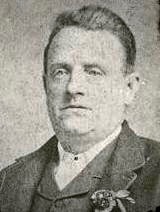
George Taylor

Georgie Porgie, Puddin’ and Pie
Set his Sights Really High
George Taylor 1830-1911   

Edward and Ann were unaware of the World Changing Event happening the day their son George came into the world.  The Church of Jesus Christ of Latter Day Saints was officially organized as this young son was born April 6, 1830.  Little did they realize; this event would be a major factor in shaping his life.  
George Taylor was the son of Edward Taylor and Ann Nichols, born April 6, 1830 at Caudle Green, Gloucester, England. At the age of 16 he first learned of the restored church.  He felt the spirit testify of the truth and was baptized.
One cold November day when George Taylor was 18 and serving as usher in the Church he saw a young lady come to Church heavily veiled, dressed in silk and satin, her hair in ringlets past her waist. She was a lovely picture. He said, "If ever I have a wife, she is the one I want." The other boys told him he couldn't touch her with a ten-foot pole. 
George set his sights high, put his trust in the Lord and got to work. He served in the Church holding the offices of Deacon, Teacher, Priest, Elder and Seventy as he was advanced in the Priesthood, in the Cheltenham branch of the LDS Church. George was about average size, he had black hair, blue grey eyes, weighed about 135-140 pounds. He learned the white and blacksmith trades making all kinds of door locks, keys, fancy fences, and iron works, etc.
George and Louisa, the lovely girl with winglets down to her waist, were married 5 years later in Nov of 1853. 
Thinking he could acquire money faster if he came to America, George was counseled to leave his family and come to the United States, then send for his wife and two children later.  
George Taylor sailed for America on the ship George Washingtonfrom Liverpool, England on March 28, 1857.  The ship arrived in Boston harbor on April 20thafter a 23 day passage.
Captain Josiah S. Comings commanded the vessel.  Replying to a complimentary note from the Saints, he stated, “I am free to acknowledge that on no previous voyage have my passengers conducted themselves so orderly and peaceably… cleanliness, morality, sobriety, reciprocation of favors and general good behavior were pre-eminently conspicuous in their conduct and character.”    
George went to Virginia. He was stricken with mountain fever and ague (malaria). For nine months he lay between life and death. It was not until the spring of 1860 that he had enough money to send for his wife and two children to come to him. They lived in Conn. For two years.
In the Spring of 1862, his family left for St. Joseph, Missouri and crossed the Missouri river and camped at Florence, Nebraska until teams were brought from Utah to take the emigrants to Salt Lake Valley. On the way to Missouri the train caught on fire and many of their belongings were burned. They had been advised to turn their money into supplies for the trip.
In June of 1862 they joined Captain Duncan's wagon Company. George and the two little girls walked all the way. Emma was not yet eight and Hattie Jane not six. The girls would beg for rest, but their mother would urge them on and told them God knew best. Louisa had to ride and hold her sickly babe; there was no food that he could eat, and he was like a skeleton, skin drawn over bones with two holes for his eyes. Everybody wanted to take and bury him, but Louisa prayed that she could take her baby to the valley and her faith and prayers got him there. When he got food, he became well and was their only son. They arrived in Salt Lake Valley the 24th of September, 1862. They were met at the mouth of Immigration Canyon by George's sister Charlotte and John Richins who had arrived earlier and had built themselves a log house. George Taylor's mother, Ann Nichols Taylor, had come with Louisa and her two children and when she saw her daughter Charlotte without any shoes, she cried bitterly, but Charlotte told her she had a pair at home and a new dress, but she must keep them for meetings and dances. Charlotte and her husband had come to UT with the Willie handcart company. 
They stayed in Salt Lake for a time and then went to settle in Goshen with George’s sister. Goshen looked so forlorn, but they thanked the Lord that they had reached a place where they could call home in the valleys of the mountains. George ran the old burr grist mill. He guarded the passes during the Indian war and once he helped surround a big band of Indians camped at the bend before daylight. He also helped build the big dam. George farmed and hauled freight for the store from Salt Lake City which took him two days with a team of mules.
Brigham Young and others came to visit twice and advised them to move some 4 miles southeast where Goshen now stands. The move was made in 1867, 12 miles west and south of Payson. Lucy can remember riding past the big dam and holding George's clock on her lap so it wouldn't get broken. The townsite was surveyed into ten-acre blocks, each block containing 10 lots, the streets being 8 rods wide. 
George got land and divided it into lots and gave it to people and helped build the meeting house and school house and hauled logs from the canyon to help build homes. He also planted shade trees and helped pioneer the town of Goshen. Their daughter remembers they were building their log house, but her father didn't have all the roof on when a big storm came up. Her mother tried to keep her little girls dry under her dress. When everything was soaked, she took them over to a friend's house who gave them dry clothing to put on while their own was being dried.
George also worked on the first railroad as far South as York, Utah. He was road supervisor for a number of years and he and his son George Milo did blacksmithing and butchering for the town. George also cut all the wheat with a cradle at harvesGeorge Taylor and Louisa, their children Emma Jenkins, Hattie Jane Higginson and George Milo Taylor all went to the St. George Temple in the fall of 1882 and did temple work for their dead relatives and friends. They were sealed to each other and had their children sealed to them. It took a week to go or travel by wagon at that time and they were gone almost a month doing their work, November 15, 1882 to December 1882. Lousia died in 1893.      
Their daughter Lucy was appointed Postmaster about 1896 so she moved into her father's home on account of it being located in the center of town. She brought a large cabinet which was put in the front room, which made a very up-to-date Post Office.  Lucy and family took care of her father until his death November 29, 1911. 

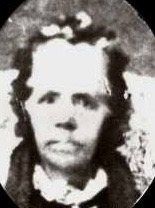
Louisa Gwyther Taylor

Miracles at Midnight
Louisa Gwyther 
1827-1893

Louisa was raised in luxury. She had servants to wait on her at every turn.  Her father was very strict with her and she had to always be immaculate.  She would be eyed up from head to toe and if anything was wrong, she would be sent back upstairs to dress and undress and try and find out what was wrong.  Louisa loved the days when the cook would allow her in the kitchen; she would watch her prepare the meals, and in her later years this helped her in the preparation of the meals for her family.  They had plenty, but the servants were not allowed to waste, and when her father found the scullery girl peeling the vegetables thin he gave her an extra schilling.
Louisa wrote: “My Father was a Baptist Minister and owned a large coach Building Establishment in Monmonthshire Wales. My Mother died of consumption when I was between three and four years of age. I was the eldest of three children, left motherless. My mother was a Lady of high Culture and Education…”
Her father took her to church every Sunday, and she had to read her Bible every day.   The children were well educated, and her brother was a great scholar and graduated from Oxford College when 18 years old with high honors, but he studied too hard, and did not live long afterwards.  She often asked her father why he did not preach the same Gospel that Jesus taught, for she felt a lack of something in his church.               
       Louisa did beautiful needlework and was accomplished in music.  She was generous, and kind and her sister would scold her when she opened her purse to give the beggar a schilling or sixpence, but she could never pass anyone who needed help.
She was about 22 years old when she first listened to the Mormon Elders preaching on the street corners. She went to the meetings, heavily veiled, and when she had read and studied, and everything was made plain to her, just the thing she had been waiting for, she was converted to the Church and soon joined it.  
“From my childhood up, I attended the Baptist Church with my Father; but always felt a lack of something substantial in the Gospel that was preached to me. I read my Bible daily and wondered why we could not have the same Gospel that Jesus taught. In the year 1849 I first heard a Mormon Elder preach; when everything I had read in the Scriptures appeared plain to my understanding just the very thing I had been searching after.I joined the church one week from the time I first heard the Gospel and was baptized and confirmed a member of the Church of Jesus Christ of Latter Day Saints.”
Louisa was taken from her room at midnight, through an open window; she slid down a rope.  The night was cold, and a storm was raging, and the elders had to break the ice in order to baptize her, November 18, 1849. Elder James W. Cummings of Salt Lake City, Utah, performed the ceremony.  She was confirmed 25 November 1849, Cheltenham, by J. W. Cummings, and she became a member of the Church of Jesus Christ of Latter-day Saints.  She did not take cold, and she kept her secret for a long time; but when her folks did find it out, she surely suffered severely for joining such a low-down set of people, as they were called at that time. She was turned out and had to go from riches to ladies' maid and seamstress, for she was disowned and had to make her own living.  Her engaged lover discarded her for joining the Church, and he died of a broken heart.
George was usher in the Church and when he saw Louisa come to church heavily veiled, dressed in silk and satin, her hair in ringlets down past her knees, she was a lovely picture. He said, if ever I have a wife, she is the one I want. They were married October 19, 1853, at Brimpsfield, Gloucester, England.  Their first child, Emma Louisa, was born August 13, 1854. In 1856, their second child, Hattie Jane was born.
Thinking he could acquire money faster if he came to America, George was counseled to leave his family and then send for them when he had the money.  He left England on March 28, 1857 on the ship George Washington.  He arrived in the United States at Boston and settled in Virginia.  He was stricken with mountain fever and ague and for nine months he lay between life and death.  It was not until the spring of 1860 that he had sufficient means to send for his wife and two children to come to him.
Louisa made a living for herself and her two children with her needle and also kept the Conference house.  When she received the news to come to America and she notified her people she was leaving, they sent her sister to plead with her to go back to them.  They would forgive her if she would denounce the Church and leave her husband.  They would take her two little girls and give them the very best education.  Her sister even went so far as to get the police and told them that the "Mormons' were spiriting her sister away.  Her sister hid the oldest girl, she cried dreadfully, did everything in her power to get Louisa to give up and go back to them. Louisa was firm; she knew the Gospel was true, and she said she would work her fingers to the bone before she would give up the true Gospel.
Louisa persuaded the Captain of the ship, Underwriter,to board at midnight in order to get off land before her sister woke up and kept her from sailing.  They left March 30, 1860, and the ship could travel no faster than the wind could take them.  Some sources say Louise traveled with her mother in law Ann Taylor and sister in law Jane, 19.  Big storms arose which blew them way off their course and it was six weeks before they arrived in New York Harbor.  
They had hardly any food to eat, so Louisa became very ill and she was confined to her bed. Emma, not six, Hattie Jane not four, always remembered the burnt peas and sea biscuits which they had to eat and carried them in their pockets nibbling on them.  
They traveled steerage and Louisa cut off her beautiful hair to keep the lice from getting into it. The sharks followed their boat and whenever a person died aboard, they would wrap them up in canvass, put weights to their head and feet, and throw them overboard.  They had to do this to keep the sharks from capsizing their boat and Louisa prayed day and night that her life would be spared to take her little girls to their father.
One night, around midnight, when she was so sick she thought she could not live any longer, an angel appeared to her bedside and brought her some food.  She turned to thank him, but he was gone.  The food made her sufficiently strong so that she could meet her husband.  When her husband met them in New York City, there was a happy reunion. He went and bought some bread and cheese, and the little girls tore it apart like hungry dogs, and their parents wept. 
 It was May 1, 1860, when they arrived in New York Harbor, and George took his family to Cheshire, New Haven, Conn., and the following year, January 27, 1861, a baby boy was born to them (George Milo Taylor).
In the spring (1862) they went to St. Joseph, Missouri, crossed the Missouri River and camped at Florence, Nebraska until teams were brought from Utah to take the emigrants to Utah.  On the way their train caught on fire and many of their belongings were burned.
They left for Utah June, 1862, in Captain Duncan's Company, Louisa rode as she held her little sickly 18-month-old baby and prayed to God to spare her boy that he could stay with them and that she could take him to Utah.  They had no food for the baby to eat, and everyone said he would not live, but he did live and by faith and prayers lived and grew to manhood and reared a large family.
They arrived in Utah valley the latter part of September, 1862 and were met at the mouth of Immigration Canyon by Grandfather's sister Charlotte and John Richins. They settled near them in Goshen.
Two more children, Lucy Palmer Taylor was born July 1, 1863, in lower Goshen and Alice Ann, was born two years later.  
Louisa went out sewing and made beautiful dresses by hand.  When the first machine was brought in, she arranged to buy it on installments, but before the last payment was due, the agent came for his money.  She asked him to give her until night to collect money due her, but he would not wait and took the machine.  The story goes that on the way to Payson, his horse got frightened and ran away, tipping over the buggy and breaking up the machine. She had to go back to sewing by hand.
She started a millinery store and the family moved up in the center of town to care for an old blind lady.  Her older girls were married.  Lucy and her younger sister, Alice, took care of the blind lady, and did the work while Louisa took care of the millinery store.  
Alice died from the effects of measles when 12 years old, so Lucy 14 was left quite alone.  They had dressed alike and were always togLouisa and George and family went to the St. George Temple in 1882 and did work for their dead relatives and friends as far back as they could get sufficient knowledge of genealogy.  They were sealed to each other and had their children sealed to them.Louisa taught in the Sunday School for years and was Secretary of the Relief Society from its first organization until her death.  She also sang in the choir and made clothes for the dead.  Louisa was a beautiful lady, but the change from wealth and luxury to pioneer life weakened her body, and she was never strong; but she never regretted her conviction, and always bore a strong and powerful testimony of the truthfulness of the Gospel and of the Prophet Joseph Smith.  In her own words, “I feel to leave my testimony to coming generations that I know this is the work of God and that Joseph Smith was a true Prophet and my fondest hopes are that my children will ever sustain and revere and uphold Mormonism. I feel to devote my life to and all I own to the furtherance of this work and may God grant me his holy spirit that I may prove faithful to the end is my humble prayer.”

Henry Goddard

Henry G. -Twenty Three and Me
Henry Goddard
1821-1901

Henry and Hannah were so excited as they prepared to make the voyage to the US and on to UT.  They were well off and without any children except their niece Mary Ann Kirk.  Her mother, Henry’s oldest sister had died when Mary Ann was 6.
This would be an adventure sailing across the sea and traveling in style in a new covered wagon with a hired driver. Henry sold most of their belongings, so he would have the money to buy the provisions they would need to make the journey comfortable for his lovely wife. Henry and Hannah intended to buy an independent outfit. A new covered wagon, yoke of oxen and provisions to last them on their journey.  
But in the company, they were assigned there were many who did not have enough to buy anything. Captain Harper counseled them to loan money to these people to help them get to Utah.  Henry gladly did this and gave up the plans for an easy journey across the plains to help the less fortunate.  
Henry loaned money to 23 people and they promised to pay him back.  He never got a cent from them.  He did have the knowledge that he had helped 23 families through.  Instead of riding in a wagon they had to walk most of the way. They had always worked inside and the journey across the ocean had weakened their bodies.  They were not acclimated to the rough dry country.  Hannah got rheumatism and suffered the rest of her life.  
 Henry Goddard was born Feb. 16, 1821 at St. Mary’s Parish, Nottingham, England. He was the fourth child of twelve children.  His father died when the youngest child was just a small baby. Henry was almost 14 so he had to work to help support the rest of the family.
His occupation was that of silk stocking and glove maker.  His work was of the highest type and very beautiful.  When he was 26 he met and married a very beautiful girl named Hannah Astill.  In the year 1850 the gospel was brought to them by the missionaries, on by the name of James Works. Hannah first accepted and was baptized by Elder George Taylor. And confirmed by Enoch Stone.  In Sept Henry was baptized and confirmed. Henry and Hannah sold everything they had to prepare for their travels to Utah.  
They boarded the ship Samuel Curling 
From the Millennial Star: “On the twenty-second of April, 1855, the ship, Samuel Curling, sailed from Liverpool with five hundred and eighty-one Saints on board, of whom three hundred and eighty-five were Perpetual Emigration Fund emigrants, all under the presidency of Elder Israel Barlow.
In the midst of a storm the captain got somewhat disheartened, and declared to Brother Barlow, the president of the company of emigrants, that he, in his long experience as a seafaring man, had never encountered a worse one; he then added that the tempest had not reached its highest point yet, but that the next half hour would be worse still. Brother Barlow, in reply, told the captain that the storm was nearly over, and would not increase in violence. This bold remark of Brother Barlow made the captain angry, as he thought he knew more about the weather and the sea than anyone else on board; but on going into his cabin to examine his barometer and other nautical instruments, he found that Brother Barlow was right; the storm abated almost immediately. Elder Barlow afterwards told some of the Saints that while the storm was raging he saw the ship surrounded by scores of angels, who stood in a circle around it with joined hands.
While crossing the plains at one time the company was stopped by a big band of Indians, Sioux, who came riding up.  They spread their buffalo robes in the path of the company.  The Captain, instead of driving over the robes, ordered the wagons to drive around them.  The Indians stood in surprise to see the whole company of 150 wagons pass by.  No one knew why the Indians had done it unless they were just daring and if they (the company) had crossed over the robes, they would have all been killed.  As it was the company passed without harm.  Another time they heard a terrible roar and saw a large herd of buffalo on the stampede coming toward them.  Before they could get out of the way or protect themselves, the herd was upon them, tipping over wagons, etc., but by God's blessing, no one was seriously hurt.
They began their trek across the 28thof July 1855.
Mary Ann Kirk, one of Henry’s sister's children, was with them and was a beautiful girl of sixteen. Just before entering Salt Lake Valley, she died, not being strong enough to stand hardships of the journey.  This was a great trial for they loved her dearly. She was buried at Little Mountain, Echo Canyon.  At the time of her death Henry was not expected to live for he also had been very sick.  They arrived in Salt Lake City Oct. 31, 1855.
Henry was so sick they had to stay there in Salt Lake.  Elder James Works was very good to them, helping in every way possible.  After Grandfather began to get better, they moved to Provo.  They located in the north western part of that city, where they lived for about a year. They had lots of good clothes they had brought from England.  They were able to trade silk dresses and a broadcloth coat for land.  They bought a log cabin in the southern part of the city where they lived for many years until they built a larger home.  But it was in this log cabin where the rest of their children were born. 
Grandfather helped build the wall on the west and south of town, but it was never completed. There were many friendly Indians who used to come and camp near their home; the children played and wrestled with the Indian children.  Grandfather furnished teams and provisions for the Indian War.
They had many hard times. In the 1870 census Henry was listed as a laborer and in the 1880 census Henry is listed as a farmer. They used to get by, by leeching wood ashes so they could make soap.  When there was no sugar, they went to the northern part of town to gather leaves from which they extracted a sweet substance.  As there were no matches, they had to bank their fires, so they would last till morning; if the fire went out they would go to the neighbors and get fire.  Grandmother had a piece of steel with which she could sometimes start a fire.
One-time Hannah their beautiful little girl with black hair and eyes attracted the attention of one of the older Indians.  The Indian said to Hannah’s father, “my little girl”, Henry said yes in fun, but the Indian thought he meant it.  When they were ready to leave, the Indian came to get her, and Henry had a hard time preventing him from taking her.  
Henry and Hannah raised one girl and two boys.  They had 20 grandchildren.  Henry died April 9, 1901 more than a decade after losing his sweet wife.  

Hannah Astill Goddard

 Hannah Astill- Ran a Hat Mill
Hannah Astill
1823-1887

Radford, England was a busting place in 1841 with a growing population.  This was good for Hannah.  Her mother kept a grocery store and Hannah’s occupation was that of a milliner. In 1841 at 18 years of age Hannah had 15 girls working for her. They used to buy the tuskin braid, then sew it together, then block it into shape and press it.  They had a large bleaching oven in which the hat shapes were bleached; then the hats were trimmed.  She was also a fine dressmaker; her hand sewing was as fine as machine sewing and all the sewing was done by hand as there were no machines at that time. 
Hannah Astill was the daughter of Joseph Astill and Harriet Wild.  
Joseph and Harriet had 7 children but they did not all live to adulthood.  The first two children, John and Selina grew up together. They then had a baby namedJoseph but he died, they named the next boy Joseph, he also died and a sister named Hannah also died. 
The family finally had two more children. They again named the boy Joseph and the girl Hannah. This was our Hannah born June 20, 1823. 
Hannah and Joseph were reared together and were best of friends.  They were raised in a very religious home.  A dance hall at that time was thought of as a devil's house, so she never entered one while young.  Her father was an old soldier having fought in the war of 1815.  
A great sorrow came into Hannah’s life when she was 16. with the death of her brother, Joseph, who died at the age of 18.  One morning he went early to fish in the River Trent; an hour later he was brought home dead.  In some way he had fallen into the river and was drowned.  This affected Hannah very much as she was very near to him in age and they were great companions.
When she was twenty-four years old her father passed away. That same year she married Henry Goddard at the Registrar's Office, Toll House Hill, Nottingham, England, December 11, 1847. Henry, a very fine silk stocking maker wove a very beautiful pair of dainty, light pink silk hose, which he gave to Hannah just before she was married to him.  She wore them at the wedding.  Later her daughter was married in them as were several of the granddaughters. 
They were very happy in their married life.  
It was not long before they were both converted to the gospel of Jesus Christ.  Hannah said, “I first heard the gospel in 1849 and was baptized by Elder George Taylor, July 15, 1850 and confirmed by Elder Enock Stone. Hannah’s oldest brother 9 years older had been baptized in 1848 along with his wife who was baptized in 1849.
Elder James Works was one of the missionaries who brought them this glad message. Henry was baptized in Sept of 1850. 
On January 28, 1853, about five years after their marriage, they were made very happy over the birth of their first child, a son; they named him Joseph.  A year later, much to their sorrow, he passed away.
         Of this Hannah wrote, “Our first child, Joseph was born January 28, 1853 and died the same year September 6th.” 
In the year 1855, they emigrated to America. They had no children but brought with them their niece, Mary Ann Kirk. Hannah was like a mother to Mary Ann, who had lost her mother when she was only 6 and she was now 16.   Mary Ann had lived with them for several years as she was listed as part of their household in the 1851 census. 
On the ship’s passenger list, Mary Ann Kirk is not found.  However, listed with Henry Goddard and Hannah Goddard is a 16-year-old female named Cathrine Goddard.  We assume that Cathrine is Mary Ann.
They left Liverpool April 22, 1855, and sailed in a sailing vessel, the Samuel Curling, and were on the ocean about five weeks, arriving at Castle Gardens in New York on. May 23rd.  It was a very rough voyage and many times they were afraid they would go down.  But through the blessings of the Lord, they finally landed safely.
Hannah recorded, “After a few days we left for Mormon Grove, where we remained seven weeks, before starting across the plains.  The journey to UT was made with ox teams and occupied three months.  We left Mormon Grove July 25thunder the command of Elder Harper.  Mary Ann Kirk, our 16 year old, niece, who was baptized about the same time and came out with us, died on the night before reaching Salt Lake City, having been ill some time through cold and exposure and fatigue of the journey, fording rivers, etc.  We buried her with many regrets, she was a faithful Latter-Day -Saint.” 
Cholera had broken out in one of their camps. Hannah had it and had turned black, but she recovered before they reached UT.  Henry was ill for nearly a year after their arrival.
They had always been used to indoor work and the long journey across the ocean had weakened their bodies and they had not become acclimated to this new country.  Hannah, through exposure of wading rivers, etc., got the rheumatism from which she suffered the remaining years of her life.
They had lots of good clothes they had brought from England.  They were able to trade silk dresses and a broadcloth coat for land. They bought a log cabin in the southern part Provo city where they lived for many years until they built a larger home. It was in this log cabin where the rest of their children were born.  
In 1856 on December 11, a black-eyed baby girl came to gladden their home.  Her name was Hannah Charlotte.  
Two years later November 20, 1858, a son was born.  His name was Henry John William. The night he was born a raging snow storm came up. Hannah’s husband was not home. Hannah went out in the storm to get the cattle under shelter.  That night her son was born.   
Enoch Samuel, another son, was born June 27, 1861.
The children grew and played with other children.  Near their home was much unsettled land.  This seemed to be the camping grounds for the Indians.  The boys often told of playing and wrestling with the Indian boys.  
Hannah noted “In Oct of 1868 we received our endowments in the Endowment House in Salt Lake City, where we were sealed for time and all eternity.”  
In his old age Hannah’s oldest brother John and his wife came to settle in West Jordan, UT. They brought news from home and the branch there.  John passed away in 1882. 
Hannah Astill ran a hat mil when she was young. As she raised her 3 children she told them stories of her little shop in England and the fine ladies who came to buy.  The grandchildren loved to gather around her and hear her stories of the old country and dress up in her stylish hats. 
Hannah was bed-ridden for her last 20 years with rheumatism, contracted through hardship and pioneer life.  Hannah died on Sept 29, 1887.  

John Kay


In and Out
John Kay 1839-1896

“There is a big wall around Utah and once you go in you will never be allowed to get out again.” That was the untruth circulating around the town of Darwin England in the 1880’s.
John and Esther endured the ridicule from others in Darwen England as they lived the restored gospel of Jesus Christ and did everything to support the missionaries. The Blackburn Branch records state that on June 1, 1883 the elders (missionaries) met with much opposition in holding outdoor meetings. “One man threatened to have Elder William Smith Tanner poisoned to see if he was an imposter.”
John and Esther Kay’s daughter Betsy left for Ut in 1884.  John and Esther did not emigrate until 1890. It is said that John made a trip to Utah before he brought his family, to see what kind of a place it was and to prove to his friends back in England that you didn't have to stay in Utah once you were there, as the people in Darwen had said. He liked it very much so returned and brought the rest of the family. 
John was the youngest of 13 children.  His mother died at age 40 just three months after his birth.  
John married Esther Howarth when he was 22 and she was 21. (1861) They were the parents of 5 children.
His wife, Esther accepted the gospel and was baptized in Sept. 1868. John was baptized 71/2 years later in 1876.  In April of the same year 2 of their children were baptized.  Esther and John’s family were the only ones of their extended families to accept the church and the only members in that vicinity.  They had to walk quite a way to attend meetings in the Blackburn branch where John was ordained an Elder. 
At age 32 John was listed as a cotton weaver and at age 42 he was listed as a general laborer.  John had a large dog that he used to take with him on his rounds as night watchman at the cotton factory.  One night in some way while making his rounds the dog was locked in one of the rooms.  He soon missed him and went back to find him; as he opened the door, the dog sprang on him and he had quite a time saving his life.  So, although he loved the dog and the children did too, he had it killed as he said he wouldn't have a dog that would attack its master.
In 1890 after his parents and most of his brothers and sisters had passed away John come to UT with his wife and their children Jane and John. Kitty 18, had just passed away. Their daughter Betsy was already in UT, married with a couple of children.  
Their only son John Thomas died very soon after arriving in UT.  This was a hard blow for John to loose his only son.  John Kay got work in the woolen mills at Provo, where their daughter, Betsy Ann, and her husband Henry Goddard had lived since their marriage. They bought a lot south of the tracks on University Avenue and built a home.  Jane was soon married to Hugh Clayton and they built a house on the same lot.
Utah was made the 45thstate Jan. 4, 1896 and just seven days later, on January 11, 1896, John Kay passed away at age 57 in Betsy's home.  Grandmother Esther never got over this and in 1898 she also passed to the great beyond.  They were both buried in the Provo City Cemetery.  They had been faithful L. D. S. to the very last.  

Esther Haworth Kay

The Elves and the Shoes
Esther Haworth 
1840-1898

Esther and her family resided in Darwen England in the 1860’s.and 70’s.  Darwin was a manufacturing town and there were many large factories. All the family had to work, and Esther was considered one of the best weavers at the factory.  She operated two looms at a time.  
Although they weren't very well off, they always had enough to share with the Mormon elders. At one time a missionary was staying with them and, as was the custom, the missionaries would place their shoes outside the door of their bedroom. Then the good lady of the house would clean and shine them.  So, in this case the elder did this, but when, Esther, saw the condition of his shoes, all worn with hardly any sole left she took action. She didn't have enough money herself, so she called all her children (each kept a part of the money he earned for his own use) and showed them the worn shoes.  They were all willing to put in some of their hard-earned pennies, together with what she had, they bought a new pair of shoes for the missionary. He was a very surprised but happy man. When he saw what they had done he was very thankful to them.
Esther was born in the manufacturing town of Darwen England.  She was the 4thof 6 daughters.  Her father died when she was 5 years old, at the same time her youngest sister was born.  Her mother took up the occupation of weaver. 
Esther and John Kay were married in 1861. At one time when they were first married, John was head gardener at a large estate of one of the nobility and lived right there on the estate.  Esther used to tell about the servants who worked in the large house who came down to visit with her. One servant said, when she was peeling potatoes, "My, my, woman, you will be the ruin of your husband.  You mustn't peel them so thick; let me show you how.”  She would barely take the skin off.  "That is the way we must do at the big house."  And the plum puddings had to be made months before they were used so that the people at the big house could digest them for they did no work at all, so all they ate had to be watched carefully. 
Another interesting story Esther told was about a strike at the factory where John, Esther, and the children worked.  John was wise enough to realize a strike was inevitable and knew what it would mean in suffering, hunger, etc., so he bought all the food he could while his money lasted so they didn't suffer much, and they helped relieve the suffering of others, many people suffered greatly before the strike was called off.
The Kays became very close with the missionaries.  When Esther heard the gospel, she knew it was true and she wanted to raise her children knowing the truth.  At that time, she had two little girls and a baby boy.  Esther was baptized Sept. 26, 1868 by Eli Kirkham. John was baptized 71/2 years later on January 6, 1876.  They were very active in the Church and raised their children in the gospel. They lost their first child but were the parents of 4 living children. Betsy, Jane, John and Kitty.
Esther’s mother died in 1878 having never joined the LDS faith. 
When John and Esther’s daughter Betsy was 21, in 1884 she emigrated to Utah with a friend Miss Kirkman. They traveled with the help of William Smith Tanner a missionary who was returning home.    
In 1889, Kitty Kay 18, the youngest daughter of John Kay and Esther Hawarth died. In the newspaper it said that she was kind to the elders, and ready to assist in any good work. She was loved and respected by all who knew her. A Large concourse of sorrowing relatives and friends followed her remains to their last retiring place.
Seven months later Esther and her children, Jane and John Thomas, boarded the ship, Wisconsin, on June 28, 1890 and arrived in New York on July 10th.  John Kay, left for America on August 2, 1890.  These dates were verified from the actual ship manifest passenger lists.  On the passenger list for the Wisconsin, Esther is listed as a nurse, Jane as a domestic and John Thomas as a mason. 
John Thomas died on October 5, 1890, of typhoid fever just three months after coming to Utah. He was about twenty-two years old. Their sorrow was almost more than they could bear, losing two of their children within a year.  But they were glad they were in Utah because of their religion. Their faith never faltered.
On Oct. 6, 1890 the manifesto ending polygamy was accepted in general conference. Further joy came to the family in 1891 when a grandson was born to Betsy Ann.
The Salt Lake Temple was dedicated Apr. 6, 1893. Exactly one month later Ernest Henry Goddard Betsy’s son age 6 died.   
On January 11, 1896, John Kay passed away at Betsy's home.  
Esther never got over this and at age 58 in 1898 she also passed to the great beyond.  They were both buried in the Provo City Cemetery.  They had been faithful L. D. S. to the very last.  

Betsy Ann Kay Goddard

Carried to Work Every Day
Betsy Ann Kay
1863-1921

Betsy Ann Kay was born Feb. 14, 1863, in Darwen, Eng.  Darwen was a manufacturing town.  Many large factories were there and most of the people were poor.  All members of the families had to work. Women and children as well as the men. As soon as Betsy was six or seven years old she was sent to the factory to work at the looms weaving cloth.  She said that her father carried her to work while she slept because they had to be to work very early.  Her father also worked as night watchman and her mother was considered one of the best weavers, operating two looms at once.
Her mother accepted the gospel was baptized when Betsy was 5 in the year 1868.  So as a small child she was taught the principals of Mormonism.  At that time everyone was compelled to go to the Church of England.  She was made to learn chapter after chapter of the Bible and repeat them from memory.  But at home she learned L.D.S. doctrine.  She was baptized when she was 8 years old by John Holden.  She must have helped teach her father about the truth as he was baptized 5 years later with her little sister.  They were the only ones of their extended families to belong to the Church and the only family in that vicinity, so they were looked down upon as Mormons by the people of the community.  They had to walk many miles to attend Sunday meetings. They would get up early Sunday morning and walk there and stay all day for the other meetings.  They enjoyed the day with the members very much.  
         The family always had enough to share with the Elders.  Many missionaries were welcome guests in their home.  John Tanner and William Smith Tanner were two of the missionaries that came quite often.  William Smith Tanner became very friendly with the family.  The family never tired of his stories about living in Nauvoo as a young boy and about sitting on the lap of Joseph Smith while the men made plans. They heard of how his father was in the Liberty jail with Joseph Smith and what is was like after the Martyrdom.  
         When Elder Smith Tanner was released from his mission in 1884 Betsy Ann and her girlfriend a Miss Kirkman decided to travel to UT with Elder Tanner.  Elder Tanner had made good money in the freighting business and he loaned money to people to emigrate to Utah.  Betsy Ann and Miss Kirkham must have grown in the gospel together as it was a Kirkham who baptized Betsy’s mother.
Their friends all tried to persuade them not to go to Utah and told them all kinds of untrue stories of Utah and the Mormons.  They told them that there was a big wall around Utah and once in, they would never be allowed to get out again.  Betsy’s boos said he would give her another big loom and that meant quite an honor in that manufacturing district.  His son also asked Betsy to stay in England to marry him.  But she was determined to go to Utah.  So, in the year 1884, when she was 21 she and her girlfriend came to Utah with Elder William Smith Tanner.  Betsy stayed close with the Tanner family and her daughter ended up marrying Elder Tanner’s 9th child. A child who was born at the time Elder Tanner was on his mission. Betsy lived with the Tanner family for a short time in Provo, Ut.  
Betsy Ann married Henry John Goddard in 1886.  

         In July of 1890 Betsy Ann’s parents, a sister and brother also came to Utah. Kitty, her youngest sister had died just 7 months before their departure.  Her brother died of typhoid fever just three months after arriving in Utah.  Their sorrow was almost more than they could bear, losing both of them within a year.  They were happy they were in Utah and their faith in the Gospel never faltered. 
Betsy Ann and Henry John were the parents of 6 children.  Their first child died at age 6. It must have been so hard losing a little boy. Another little boy Elvin died at age 2 when he inhaled a bean down his windpipe. They were unable to remove it or prevent it from swelling.  
Betsy Ann and Henry John were sealed in the Salt Lake Temple the tenth of April 1995.  That same day they had their children sealed to them, her aunt Jane was endowed.  

*All of the information in this book comes from LDS Family Search, DUP histories, Mormon Overland Pioneer Trail Histories, personal family histories or research of historical facts on the internet.  

Utah Pioneers Vol. 2

Saturday, September 10, 2011

John Esplin


“Command Thy Passions, Control Thy Thoughts”
John Esplin
                                                             
Photo of Tanner Esplin: a descendent of John Esplin 
Photo taken by Jodi Esplin 
Web site: jodisperception.com, used with permission
 
            The sky was clear and especially blue.  The grass brushed John's legs and the wind blew across his face. As he hurried along the cow trail in his mind he chanted the words, “Command thy passions, Control thy thoughts” He did not know where the words had come from, maybe something his mother had drilled into the heads of his stubborn older brothers.  John did know that his passion was being out with the livestock. He loved the freedom and peace of the outdoors.
            John Esplin was born in a little cottage in Warden, Perth, Scotland.  He was the youngest of seven children: a tough wirily little guy, the shortest brother even after he was grown. 
At the age 9 John was excited to be trusted as one of the regular cattle herders among the Angus cattle in the highlands of Scotland.  
John wrote, ""From 9 years old to 15, I tended or herded cattle in summer and went to school three or four months in the year. Then I was engaged to James Jack for 3 years to learn tailoring."  John was a good reader, wrote a clear hand and was good with math. He walked 6 miles each way to school. He and his brother William must have enjoyed boyish pranks on those long walks. 
John's mother died when he was nineteen years old. A month after her death the family left the highlands and moved to Locke, Scotland, where they owned some houses and lots. Locke was a city with a large number of Irish workers and jute mills. 
One day in the spring of 1849, Johnny Robertson, a school buddy told John the most exciting news he had ever heard.  It was about a prophet on the earth today.
John was so excited about what he heard he wanted to learn more. He attended meetings with the missionaries. (Elder Richard Brown and Elder Hugh Findlay) and spent several months studying the gospel. What an exciting message.   He was baptized in the river Tay at Dundee  (Aug. 4th, 1849 Elder Brown and confirmed by Elder Findlay.)
            After being baptized by John was filled with happiness and hope. In his journal he wrote, “I rejoiced under the cheering influence of the Spirit of the Lord… and wondered why others could not believe and embrace the glorious principles.”  
           He tried to get his family, his father, older brothers and his sisters to see the light of truth he enjoyed in being a member of the restored gospel but they were not impressed by its teachings. 
A year after his baptism John made a decision. He would leave his home, and sail to America to join the saints. The Esplin’s were a close family and leaving them was one of the hardest things John would ever do. 
John with two boxes of apparel and one gun listed his occupation as Tailor and sailed to America, September 4, 1850 on the “North Atlantic” a ship with over 300 other Latter day Saints. 
Of that day John wrote, "A gentle breeze during the day.  A severe gale arose that night and continued unsettled till Saturday the 14th. During that time I suffered severely from sea sickness and fever. The rest of the passengers with a few exceptions also suffered most severely.”
For two long months they sailed. They arrived in New Orleans and then went up the Mississippi River on a steamer. John worked the winter in St. Louis and by spring he made his way to Council Bluffs, where many Mormons were waiting to make the trek west.
John wrote, “I worked my way across the plains by driving a team for Joshua Grant who was hauling freight for Dustin Amy, a tin smith. I arrived in Salt Lake Valley on September 28, 1851.”
After his long journey to America John received letters from home. His father wrote, “It was with much pleasure that I received your letter informing me about your pleasant voyage and safe arrival as I was very much concerned about you. …You mention your stability in the faith you profess. May God bless you in it, and may you ever bear in mind that Christ is the rock on which to build. If you build the house of your hopes on any other it may glitter in the sunshine of prosperity but will not stand in the day of God's wrath.” 
John cherished the letters he received.  His brother William wrote and said he would like to join John in America if they would accept someone of another creed. His brother-in-law David Annand said, "William is very steady at his work and drinks no spirits…Your father is in good health at present always ernest for a little more of this worlds treasure he thinks often of you and complains he is never to see you again,"
A letter from his brother David stated, "We have only one boy, two and one half years old…. He is a fine little fellow just like what you were yourself at his age" 
John had only been in Utah a little over a year when he received a letter from his brother-in-law containing sad news.  “I cannot delay any longer writing you owing to what has befallen your aged father, when I tell you that he is not more. After suffering sorely for ten days with a cold, under heavy distress, died on the 16th of December. Your father showed great signs of repentance and submission before he died.”  The letter also said “William sailed to Australia. He headed to the gold mines and was never heard from again”.
Years latter as John read the letters form his family he scribbled across a letter from his brother William, “O' Willie, where are you now?" April 1859, J. Esplin.
John hired on with Charles A. Harper in Big Cottonwood.  When Brother Harper was called on a mission to England  John rented his farm for a year. 
Margaret Webster, a cute little gal from Lancashire England caught his eye.  They married in November 1853 and moved to Salt Creek, now Nephi where they built their first home of willows woven together with a dirt roof.   Joseph Heywood, the first Utah Marshall and others had been called to settle the Salt Creek area.  The Ute Indian Chief, Chief Walker, was the terror of the whole western area, carrying on an extensive slave trade as well as a horse trade. John and Margaret fought the Indians at the time of the Walker War along with the other settlers. 
The day their 8th child, David, was born the Esplins were called to help settle what is now Nevada. They called it the Muddy Mission. In the Nevada desert they fought sand flies, mosquitoes, extreme heat and Indians.  In an Indian raid on ST. Joseph, the Indians carried off 60 head of cattle that were never recovered. This must have been devastating.
In 1870 the government shifted the Nevada State Line. The conversation would have gone like this, “They are making this area a part of Nevada? We have three years of back taxes to pay?  How in the world will we pay back taxes?  The Indians have carried off 60 head of cattle.  We may not even be able to feed our families.
Brigham Young recognizing the hardships of living on the desert and the impossibility of paying the high Nevada taxes released these destitute settlers from the Muddy Mission. He strongly suggested they help settle Long Valley and establish the United Order. John once again followed the direction of the prophet. In Long Valley as the United Order was set up John was given the responsibility and care of the livestock.
In the family bible John wrote, “we as a family lived and labored in the United Order until September 1885.”  When the Order broke up John bought a 20-acre farm. During his later years John had inflammatory rheumatism and also lameness caused by breaking his kneecap.  He kept on working even though he was a cripple.
John's grandchildren remember watching grandpa John trimming his beard and hair with a candle and knowing that it did not work so well when they tried it.  They remember he did his own tailoring and made a perfect buttonhole. 
Many in Long Valley remember John for his big heart and his favorite bull.  Riding a bull to town,  John would take food to widows or those in need, (always giving a whole ham, not a slice). John rode the bull to the edge of town, tied it up on a clump of cedars, and walked on in. The young boys of the settlement loved to snitch a ride while he was gone, being careful to have it tied back up before John returned. 
In his latter years as John fingered the letters he carried with him he read the saying he had written in the margin.  “Command your passions and control your thoughts.”  John realized his passion was still the open range but even more his passion was teaching his posterity to live righteously and love the Lord.  John and Margaret not only raised prize livestock but raised a righteous family of 13 children. Today it is hard to find an Esplin in the United States that do not live up to the motto of  “Command thy passions, Control thy thoughts” In the fall of 1885 while he was out working he became sick and being unable to walk, he crawled on his hands and knees to the house.  He died form the effects of a stroke October 19, 1895.